
Good field identification begins with description, not certainty. These guides show how to photograph a find, compare the clues a picture can and cannot capture, and decide when a non-destructive observation—or an expert—is the honest next step.
Field guide topic
How to Identify Rocks and Minerals in the Field
Build a careful identification shortlist from photos, physical clues, safe comparisons, and the right expert handoff.
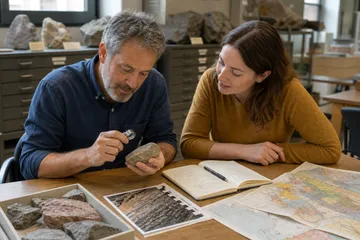 When a Rock ID Needs a Geologist or a LabLearn when a photo shortlist is enough, when to seek an in-person geologist, and when a scientific or gemological laboratory is the right next step.
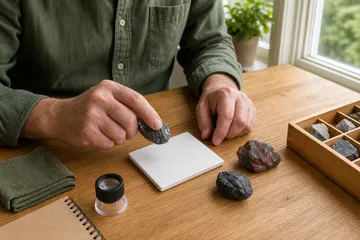 How to Use a Streak Plate SafelyLearn what a mineral streak reveals, when the test is useful, and when making powder would damage a specimen or create an avoidable hazard.
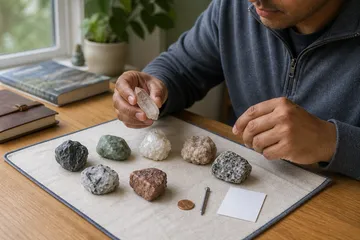 A Beginner’s Guide to Relative HardnessLearn what Mohs hardness means, when a scratch comparison is appropriate, and how to bracket a mineral safely without mistaking a metal mark.
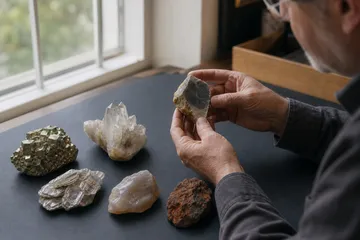 Metallic, Glassy, Waxy, or Dull? Mineral Luster ExplainedLearn how to observe metallic, glassy, pearly, waxy, silky, and earthy mineral luster without confusing color, sparkle, polish, or wetness.
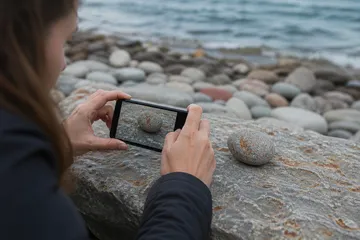 How to Identify a Rock From a Photo (and What a Photo Cannot Tell You)Use a rock photo to build a careful shortlist, then add safe observations that separate lookalikes and reveal when an expert is needed.
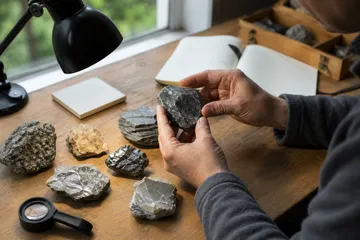 Six Clues That Matter More Than ColorLearn to compare luster, grain, crystal form, breakage, hardness, and heft—the physical clues that make mineral identification more reliable.
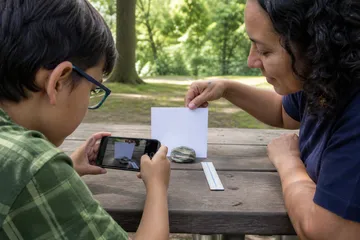 How to Take Better Rock Identification PhotosLearn how to choose one clear rock photo that shows useful color, scale, texture, and luster for a StoneScout identification.