
StoneScout field notes
Look closer. Learn the clues.
Practical, careful guidance for the next stone that catches your eye.
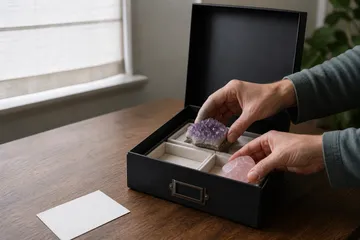 Minerals That Fade: What to Keep Out of Strong LightLearn which specimens may fade or discolor, why windowsills are risky, and how opaque storage, limited display, and baseline photos preserve color.
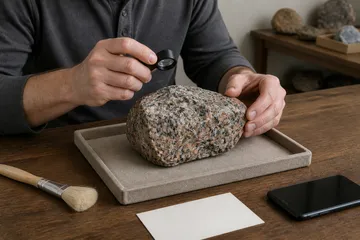 How to Clean Rocks and Minerals Without Ruining ThemUse a cautious cleaning sequence that protects crystal surfaces, labels, coatings, and fragile or water-sensitive specimens.
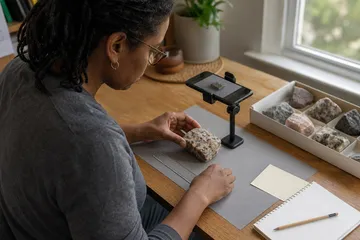 A Simple System for Photographing and Cataloging SpecimensCreate consistent specimen records with a phone, neutral light, useful views, stable file names, clear captions, and an independent backup.
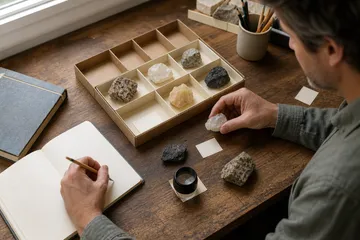 How to Label a Rock and Mineral CollectionBuild a durable specimen-label system with unique numbers, useful locality records, honest identification notes, and labels that stay with each stone.
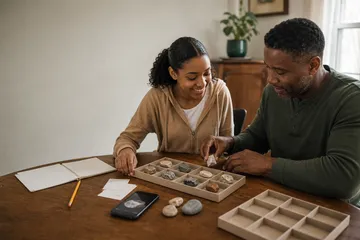 How to Start a Rock Collection Without Buying EverythingBuild a focused beginner rock collection with a clear theme, legal collecting habits, useful labels, careful purchases, and space to keep learning.
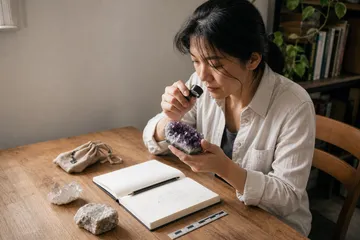 Crystal Meanings, Tradition, and What Science Can Actually SaySeparate crystal lore and personal symbolism from measurable mineral properties, clinical evidence, and the health claims science can actually test.
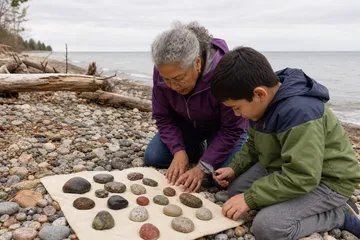 Common Stones of Great Lakes BeachesLearn the rock groups commonly seen on Great Lakes shores, how glaciers mixed them, and how to observe them without overclaiming or collecting illegally.
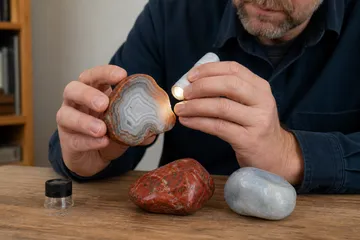 Agate, Jasper, and Chalcedony: How They RelateSee how chalcedony, agate, and jasper overlap, which visible clues separate them, and why some specimens sit honestly between the names.
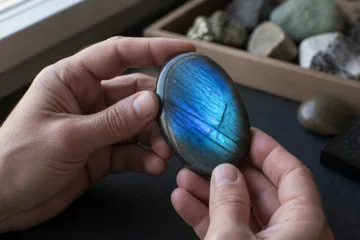 What Causes Labradorite’s Blue Flash?Learn how microscopic feldspar layers create labradorite’s directional blue flash, why it vanishes at some angles, and what the effect can—and cannot—identify.
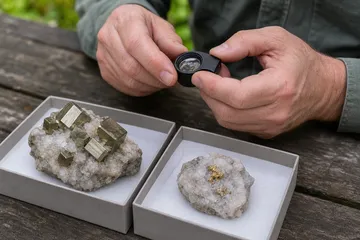 Pyrite vs. Gold: Clues You Can Check Without Damaging the SpecimenCompare pyrite, native gold, chalcopyrite, and mica using form, color, heft, and existing surfaces—without scratching or crushing your find.
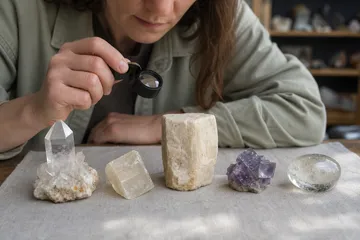 Quartz and Its Common LookalikesCompare quartz with calcite, feldspar, fluorite, and glass using crystal shape, cleavage, fracture, hardness, and other non-destructive clues.
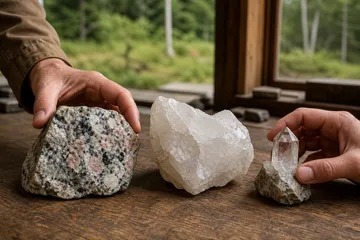 Rock vs. Mineral vs. Crystal: What’s the Difference?Learn how rocks, minerals, and crystals relate, why one specimen can fit more than one term, and which visible clues help you describe a find.
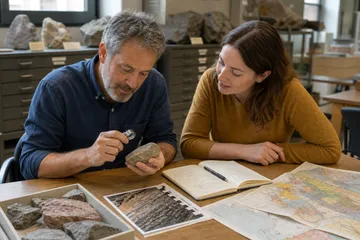 When a Rock ID Needs a Geologist or a LabLearn when a photo shortlist is enough, when to seek an in-person geologist, and when a scientific or gemological laboratory is the right next step.
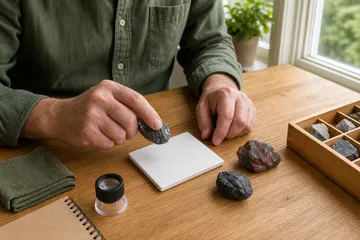 How to Use a Streak Plate SafelyLearn what a mineral streak reveals, when the test is useful, and when making powder would damage a specimen or create an avoidable hazard.
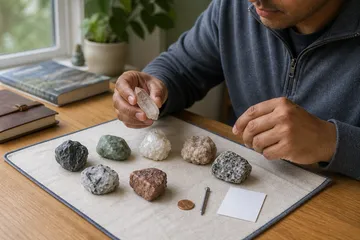 A Beginner’s Guide to Relative HardnessLearn what Mohs hardness means, when a scratch comparison is appropriate, and how to bracket a mineral safely without mistaking a metal mark.
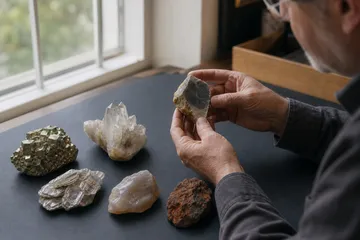 Metallic, Glassy, Waxy, or Dull? Mineral Luster ExplainedLearn how to observe metallic, glassy, pearly, waxy, silky, and earthy mineral luster without confusing color, sparkle, polish, or wetness.
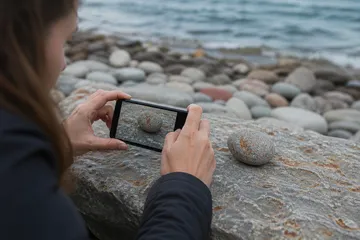 How to Identify a Rock From a Photo (and What a Photo Cannot Tell You)Use a rock photo to build a careful shortlist, then add safe observations that separate lookalikes and reveal when an expert is needed.
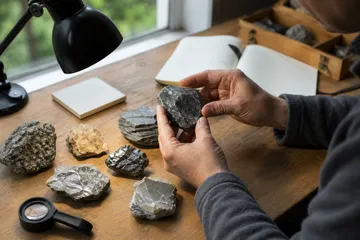 Six Clues That Matter More Than ColorLearn to compare luster, grain, crystal form, breakage, hardness, and heft—the physical clues that make mineral identification more reliable.
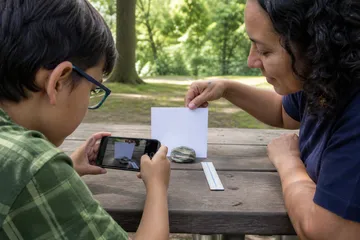 How to Take Better Rock Identification PhotosLearn how to choose one clear rock photo that shows useful color, scale, texture, and luster for a StoneScout identification.